3 Ways We Can Nurture Empathy By Studying Book Characters
When students are asked to depict book characters, they oftentimes choose 1 word like "lucky," "sporty," or a single phrase like "she's bossy." It'south difficult to get kids to stop labeling. Just we want them to find that characters, similar people, have more than than ane personality trait. Studying volume characters intentionally helps students empathize people's complexities and empathize with them. Here are three terrific character lessons for nurturing empathy from What Do I Teach Readers Tomorrow? Your Moment-to-Moment Decision-Making Guide by Gravity Goldberg and Renee Houser.
The authors do a fantastic job of giving step-by-step directions with electric current fiction favorites for how to explicitly teach character analysis to your students. Teachers will return to this get-go lesson whenever students demand to sharpen their skills at studying book characters. We wouldn't be surprised if they start analyzing characters on their own, as well as people they know in real life!
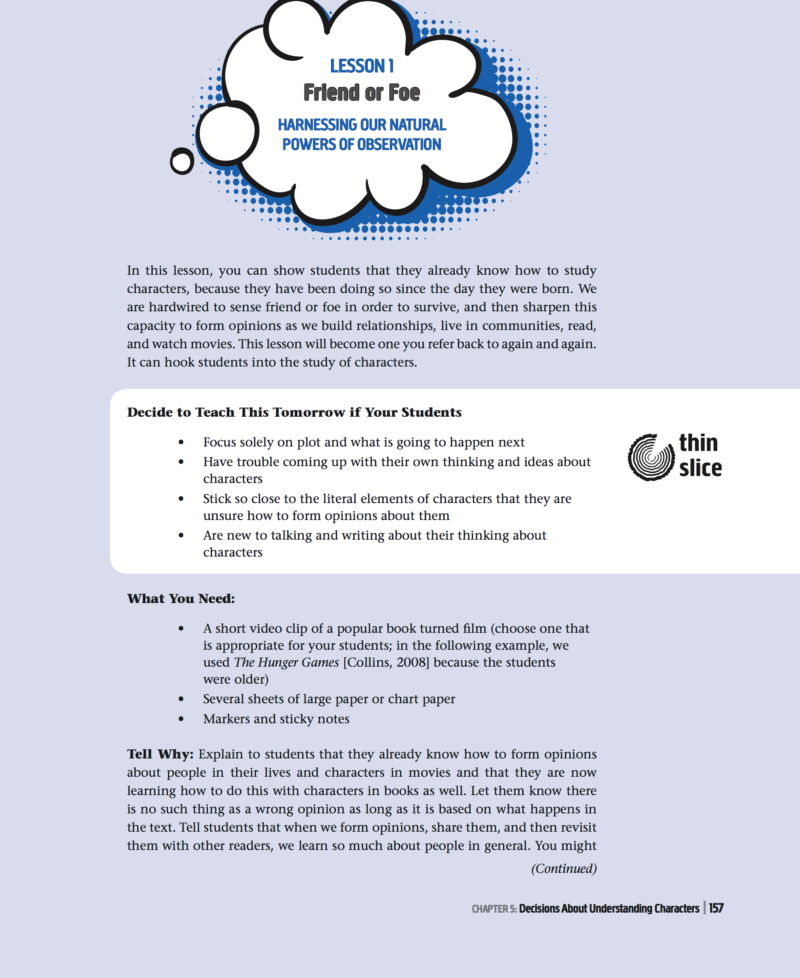
i. Teach students how to unwrap character traits to decide if they are friend or foe.
When students are very new to talking, writing, and thinking almost characters, they tend to rely on plot and literal elements of characters. This lesson helps them begin to form nuanced opinions about characters and their relationships.
The interesting thing is that the more than a student sees the complexity of a character, the less they think of people as having a single label. Understanding the complexity of peoples' personalities is what helps students begin to empathize with others.
Download hither!
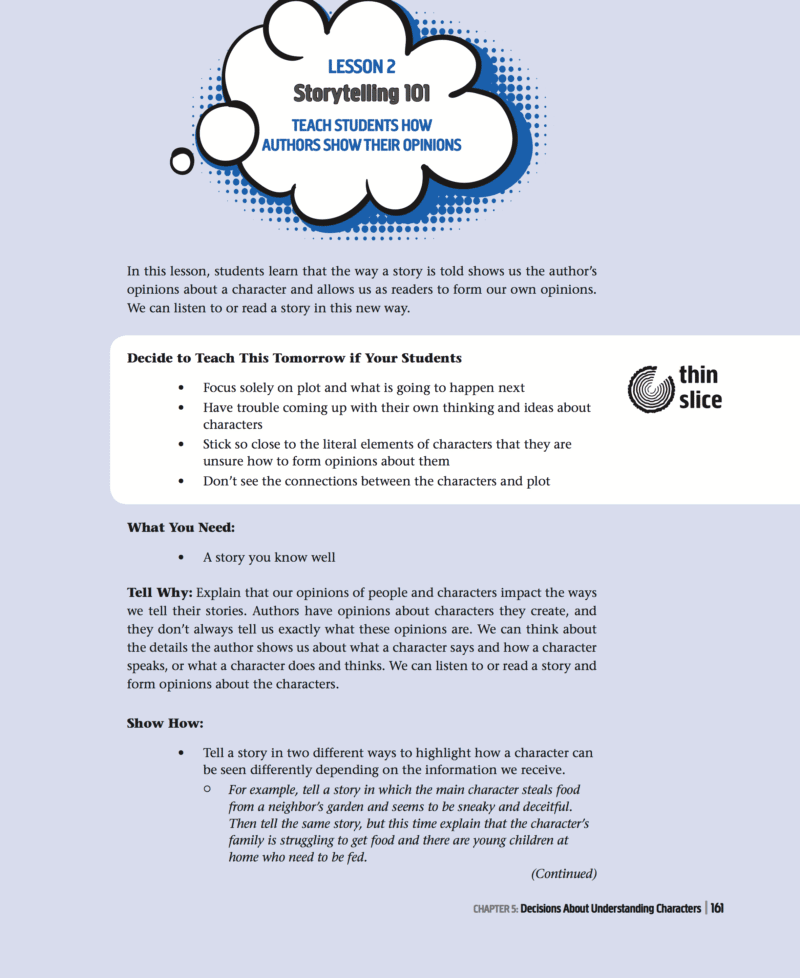
2. Teach students how authors show their opinions about characters.
Authors of fiction develop storylines that guide readers to connect character action and behavior to their emotions. This helps children see that characters tin can have a wide range of emotions shared throughout a story. Storylines finer help people relate to ane another. The cool office most lesson two is that students begin to clarify why an author is telling a story in a certain style. Students will exist taught to consider what the author'due south stance about the character might be based on how the story is told. This is high-level thinking at its best.
In this lesson, there are several ways to show students how to consider the concept of character opinions from sketching to interviews to finally, self-reflection.
With this introduction to analytical thinking, students volition inevitably find the process of noticing a character's psychological states fascinating.
Download here!
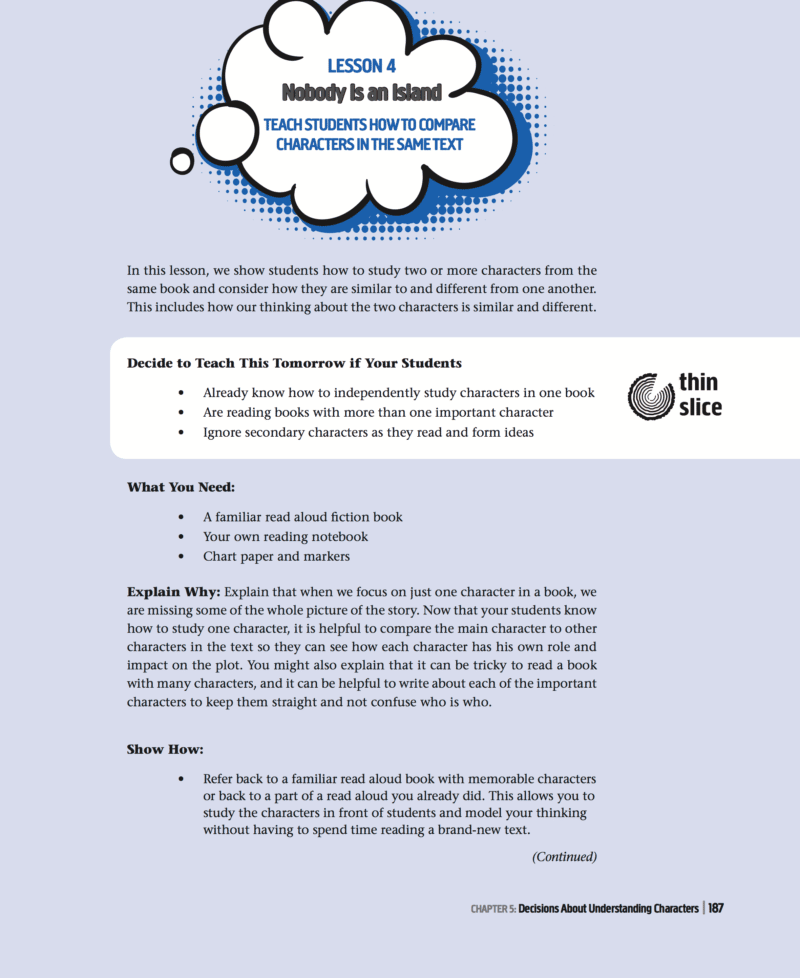
three. Teach students how to compare characters to each other.
This lesson is all about comparing characters from the same volume. If we focus on only one grapheme, nosotros might miss the bigger story. It is the relationships between characters that tells the story.
In this lesson, we motion towards because how a student is thinking. The authors use real text from existent students to showcase different kinds of thinking ranging from right-at present thinking to over-time thinking. It's awesome that they include student samples and so you lot know what to look for when y'all teach your own students.
When we teach students to run across similarities and differences in characters who announced to be very like or very different, they begin to shift their initial reactions and open their thinking upward to possibilities.
Download here!
In that location is so much to teach children throughout the yr. Just these authors eddy every big moving picture lesson down to a framework you can use right now to brand choices virtually what to teach each student next. They've taken a very complex piece of literacy and created digestible chunks that any teacher can use effectively. Each lesson builds on the previous lesson, merely can also exist used a stand up-alone lesson. That style, they can exist returned to whenever a student needs a reminder nearly the importance of studying book characters.
Source: https://www.weareteachers.com/studying-book-characters/
0 Response to "3 Ways We Can Nurture Empathy By Studying Book Characters"
Post a Comment